“marqueeItems”: [ {
“text”: “Short Stories”
}, {
“text”: “·”
}, {
“text”: “Short Stories”
}, {
“text”: “·”
}, {
“text”: “Short Stories”
}, {
“text”: “·”
} ],
“linkTo”: “”,
“waveFrequency”: 4,
“waveIntensity”: 0,
“animationDirection”: “left”,
“animationSpeed”: 0.5,
“pausedOnHover”: true,
“textStyle”: “heading-1”,
“textSize”: {
“unit”: “rem”,
“value”: 4.0
},
“itemSpacing”: {
“unit”: “em”,
“value”: 0.6
},
“blockId”: “bcaa51e52989fe4eb44c”,
“estimatedDimensions”: {
“estimatedColumnSpanDesktop”: 24,
“sectionColumnsDesktop”: 24,
“estimatedColumnSpanMobile”: 8,
“sectionColumnsMobile”: 8
},
“containerStyles”: {
“backgroundEnabled”: false,
“borderRadii”: {
“topLeft”: {
“unit”: “px”,
“value”: 0.0
},
“topRight”: {
“unit”: “px”,
“value”: 0.0
},
“bottomLeft”: {
“unit”: “px”,
“value”: 0.0
},
“bottomRight”: {
“unit”: “px”,
“value”: 0.0
}
},
“padding”: {
“top”: {
“unit”: “%”,
“value”: 3.0
},
“right”: {
“unit”: “%”,
“value”: 0.0
},
“bottom”: {
“unit”: “%”,
“value”: 3.0
},
“left”: {
“unit”: “%”,
“value”: 0.0
}
},
“stretchedToFill”: false,
“backgroundColor”: {
“type”: “THEME_COLOR”
},
“stroke”: {
“style”: “none”,
“color”: {
“type”: “THEME_COLOR”
},
“thickness”: {
“unit”: “px”,
“value”: 6.0
},
“dashLength”: {
“unit”: “px”,
“value”: 5.0
},
“gapLength”: {
“unit”: “px”,
“value”: 15.0
},
“linecap”: “square”
},
“blendMode”: “normal”,
“blur”: {
“enabled”: false,
“filterType”: “backdrop”,
“blurRadius”: {
“unit”: “px”,
“value”: 15.0
}
}
},
“featureFlags”: {
“useCLDRMoneyFormat”: true
}
}
Short Stories
·
Short Stories
·
Short Stories
·
Short Stories
·
Short Stories
·
Short Stories
·
Short Stories · Short Stories · Short Stories ·
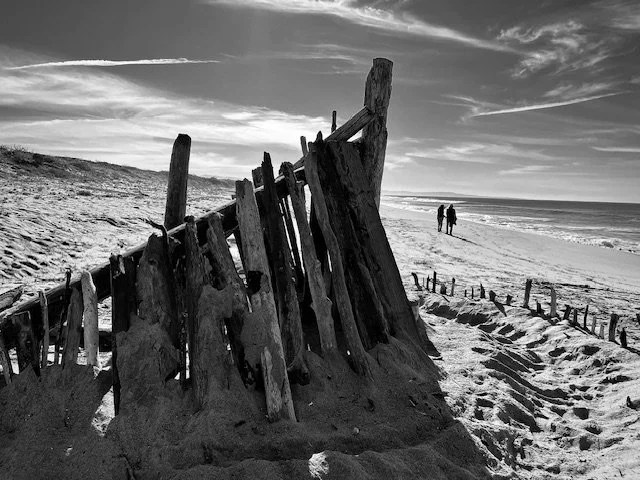
Beach Birthday
by Connie Chen
Jeremy’s father’s birthday is on Saturday; no one is not responding to Jeremy’s texts. During the week Jeremy broadcasted the family chat. “Dad birthday this weekend?” “How about driving to the beach?” Too many people, not enough direction. Still, Jeremy picks up his reluctant father Saturday morning.
Jeremy parks the car by the grassy edge overlooking ocean. Gusts of wind leap up from the rocky beach below. His father’s jacket billows like a balloon as he steps off the manicured path—where the people living in the million-dollar-seaside-houses stroll. Recalling himself a small figure, Jeremy’s childhood memories sail past, feeling the textured weight of climbing up his father’s legs. Hands gripping his father’s, planting his feet on his chest, stepping on shoulders so high they brushed popcorn ceiling. How big his father was, how sturdy, how expansive the view from up there, Jeremy’s head just above the deep black patch of his father’s hair.
“I grew up near the edge of rocks like this,” says Jeremy’s father.
Now, Jeremy’s father makes his way down stone steps to the beach. The wind flurries the same top of his father’s head, grey lines parting his scalp. Jeremy sees the lines of age extending, color drained from the black he remembered. At the bottom of the stairs the sand tunnels up around them, salting hair, the ocean’s foamy water crashing against jagged rock. When the wind ceases it lays bare the old thin figure of his father; a leap of wind and he is enlarged again, then small, then large. Jeremy takes in both forms of his father; and then his father is shrunken and far away, a child-like figure clumsily stepping through rocks in broken down running shoes, the soles splitting and peeling off, and Jeremy resists reaching out to grab the back of his jacket, to prevent his father from climbing back to the ocean, his rugged home.
Connie W Chen is a Taiwanese-American writer and engineer from the Bay Area. She writes short stories and completed her MFA at the University of San Francisco. Outside of writing she enjoys film photography and fashion styling
Maria’s dad had been drinking when she told him she was pregnant. A small tumbler of dark rum at the foot of the ladder, which leaned against the roof. She figured this was as good a time as any; when was he sober anyways? Maria tried to remember the last conversation she’d had with her father—the last one that meant something—but could only remember the one about the lawn, about his not mowing it and the weeds growing tall, and how Maria’s mother ought to contribute around the house, though he was unhappy when Maria brought up the fact that her mother really did everything. Well, not everything. But she called the people that fixed the pipes, took their trash, and walked their dog. Because the dog had passed, her dad said that they didn’t need anyone to walk the dog anymore, and Maria said that wasn’t the point.
He was sitting at the base of the ladder, staring at the gutter. A rainstorm had come and gone and the grass was damp and soft beneath them. The water wasn’t draining right, it was too slow. A blockage, he said. Then he asked her to tell her mother. About the baby, not the gutter. The gutter he would figure out on his own.
Maria didn’t say that she already had and the woman had deteriorated into a sniveling, greedy mess of emotions. Maria hated women like that. They reminded her of pets. When she thought about this, she couldn’t discern the origin of her distaste; whether her mother was the original model, or whether this criticism was really a personal characterization unrelated to her upbringing.
Pointing to his phone, which sat on top of the glass tumbler to prevent leaves and dust from falling in, he said to call her right now. See what she has to say, and what was it to him anyways, whether she had something inside her womb, some flopping fish. It was nothing, nothing at all. Not even worth picking up the phone for trouble like that. Maria, in turn, took his phone and threw it at the window which shook, but didn’t shatter. She expected theatrics. She was slightly ashamed at her weakness. She thought of picking the phone up and throwing it a second time, harder, but understood that, should the phone or the window not shatter, she would be too embarrassed to face him.
He asked, Well, what the hell did you do that for?
Don’t call me that, Maria said. Don’t call me a flopping fish. He put his face into his hands and she knew he wouldn’t hit her, he couldn’t retch up that old violence of his even though he wanted so desperately for the weight of his fist to have meaning and power, to be a thing that can stand on its own and hush the world. Instead, he drained his glass and climbed onto the roof using that shoddy ladder hanging over the battered porch of theirs.
Looking at it then, the house was worse than she remembered. In disarray. Maria’s mother had been the one maintaining it, paying contractors to replace decaying wood, cleaning out the gutters in fall, catching grime beneath her nails while she crawled beneath the house to clear a nest of raccoons that screamed in the night. Without her, their sweet barn house had turned into a hovel.
Maria had caught a child trying to break into her bedroom window one time. When she’d questioned him, he said that it was a dare. They said this house is haunted, he said. She snorted. Staring at her father climbing up the ladder, she thought those kids were right all this time. There were ghosts here of an older time. Get down from there, she said, eyeing her dad’s leg. It was shaking even now, pinging back and forth, the bone hardly enough to keep it straight.
Go back to your mother’s, he said. Now that wasn’t very nice. Shouldn’t a daughter be able to depend on her father? Shouldn’t a father want to protect his daughter? Sentimentalities. Maria brought up neither to him. Instead, she unfolded a newspaper and sat in the mud, positioning the paper so that her father was still visible above it. She sat like this for a long time, Maria’s ass wet and freezing, the clouds charcoal-dark, watching her dad wince as he kicked up clumps of debris from the gutter.
When she folded up her newspaper and pretended to fall asleep, her father called down to her, Who’s the guy?
She opened her eyes, and waited for her vision to adjust to the light, for her dad’s features to become distinguishable. He was looking at her then, so she told him the truth.
Ah. Sorry to hear that, he said.
Me too.
Well that just sounds pathetic.
They both laughed at that. It was easier to just laugh. She had no idea how to iron her life out, clear it free of wrinkles and tighten the cotton again. She felt that her life had taken a wrong exit onto a one-way road which stretched onwards forever and ever, and where would it take her? How could she return to her previous life?
Her father was coming down now, saying words to comfort her but they were just the grunting noises of old men, sounds like ach, or boo, or wellum. He set down the glass of rum along the top rung of the ladder, and stepped down one step at a time. He was breathing very hard then, the slight catch of his breath, stopping at the halfway point to rest. Had he always been so out of shape? And then, reaching up for the tumbler, the ladder sank deeper into the mud. He was panicking, slightly drunk, and she saw gravity reach for him, invisible hands grabbing at his collar, sliding its long fingers into the folds and pulling him toward the ground.
he rushed over and he seemed alive. Looked alive. Eyes open very wide. He couldn’t be dead, because dead people looked a certain way. Of course, she had never seen a dead person before, but she had this sense that she would just know, in the same way she could tell if a towel was still damp, or if it was raining. She put his fingers below his nose, over his lips, to feel for breath but she could not feel anything. She was very, very cold. They both were. The blood from his head drew out little symbols into the grass around them.
Days later, the red calculus of his fall was still there, stained into the ground. She searched for meaning in that spot, traced the outline of dried blood with her fingers as if casting a spell, and found nothing.
Matthew Choi is a recipient of the Keith E. Vineyard Short Story Scholarship and Brancart Fiction Prize. He is also the recipient of a Dean’s Scholarship at the University of San Francisco. His story, “Snake baby,” was nominated for the PEN/Robert J. Dau Short Story Prize for Emerging Writers. His works have previously been published in Open Ceilings, Tint Journal, and Four Leaf Collective. Born in Seoul, South Korea, Matthew now resides in San Francisco where he works as a bookseller, hoping to publish a short story collection.

 Destapled